Clutch Position Sensor Faults
Judder, limp mode, lost gears or a clutch that never quite bites. When the clutch position sensor stops telling the truth, the gearbox stops trusting the clutch. We diagnose, test and repair clutch position sensor faults properly, on DSG, DCT, automated manual and manual vehicles.
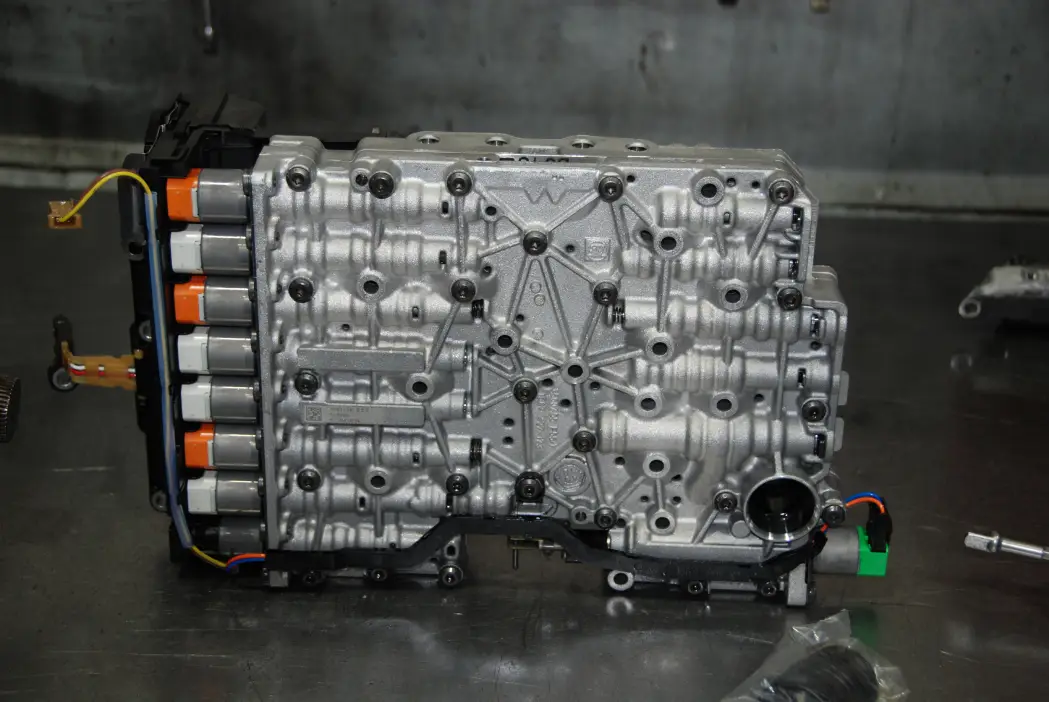
What is a clutch position sensor?
A clutch position sensor measures exactly how far a clutch has travelled and reports that position back to a control unit as a continuously varying electrical signal. It is a displacement sensor, not a switch: instead of simply saying "engaged" or "disengaged", it reports clutch position across the entire range of travel, many times per second.
That signal is what allows a transmission control unit to close the loop on clutch torque. Without a trustworthy position reading the control unit cannot know how much torque the clutch is actually transmitting, so it cannot make a smooth pull away, cannot overlap two clutches during a shift, and cannot protect the clutch from slipping. When the signal is lost or becomes implausible, most gearboxes take the only safe option available and drop into emergency mode.
Two very different sensors share the same name
Most confusion around this fault starts here. "Clutch position sensor" describes two completely different components fitted to two completely different types of car. Diagnosing the wrong one wastes money, so the first job is always establishing which one your vehicle actually has.
1. Internal clutch actuator position sensor
Fitted to dual clutch gearboxes (DSG, DCT, PDK, PowerShift, EDC) and automated manuals. It sits inside the gearbox or mechatronic unit and measures the travel of the clutch actuator, lever or hydraulic piston.
- One sensor per clutch, so dual clutch units have two
- Almost always integrated into the mechatronic / TCU assembly
- Rarely available as a standalone part
- Failure causes limp mode, judder and lost gears
- This is the one behind the vast majority of searches
2. Clutch pedal position sensor
Fitted to manual vehicles, mounted on the pedal box. It measures how far the driver has pressed the clutch pedal and feeds the engine control unit rather than a gearbox control unit.
- Used for stop/start, cruise control cancel and start inhibit
- Used for idle stabilisation and shift indicator prompts
- Can be a simple switch, a potentiometer or a hall sensor
- Usually an accessible, replaceable part
- Failure rarely stops the car, but disables convenience functions
Quick test: if your car has a clutch pedal, you are almost certainly dealing with a pedal position sensor. If it has two pedals and a DSG, DCT or automated manual gearbox, you are dealing with an internal clutch actuator position sensor.
How a clutch position sensor works
Every variant does the same job in a different way: convert a mechanical distance into a value the control unit can read. Knowing which type is fitted matters, because each one fails with its own signature.
Contactless linear (PLCD / inductive)
A magnet or metal target moves along a coil assembly and the sensor measures the change in the magnetic field. There is no physical wiper, so mechanical wear is not the failure mode. These fail electrically, from thermal fatigue, vibration or moisture. Typical on VAG dry clutch mechatronic units.
Hall effect rotary
A magnet on the actuator shaft rotates past a hall element, giving a clean analogue ramp across the travel. Common on electro-mechanical clutch actuators and on many clutch pedal sensors. Fails through cracked magnets, supply faults or corroded connector pins.
Potentiometer (resistive track)
A wiper sweeps a resistive track and returns a proportional voltage. Simple and long established, but the track wears where the clutch spends most of its life, producing dropouts in the middle of the range while both ends still read correctly. Common on older automated manuals and pedal sensors.
What the control unit does with the signal
- Learns and stores the clutch kiss point (touch point)
- Calculates transmitted clutch torque during engagement
- Overlaps clutch 1 and clutch 2 during a gear change
- Compares commanded position against actual position every cycle
- Tracks slip and clutch wear over the life of the gearbox
- Adapts continuously to compensate for wear and temperature
Why a bad signal causes limp mode
The control unit runs a plausibility check: commanded position against measured position against the resulting change in input shaft speed. If the sensor says the clutch is open while the shaft speeds say it is closed, the software cannot safely command torque. Rather than risk two clutches closing at once, or a clutch slipping until it burns, the unit stores a fault, freezes adaptation and restricts operation to a safe subset of gears. That is why a sensor fault so often presents as "gearbox emergency mode" rather than as an obvious electrical fault.
Symptoms of a faulty clutch position sensor
Symptoms depend heavily on whether the signal is completely lost, intermittent, or simply drifting out of calibration. A total loss is obvious. A drifting signal is far more common and much more often misdiagnosed as a worn clutch.
Signal lost completely
- Gearbox emergency mode / limp mode on start-up
- Gear indicator or PRNDS display flashing
- No drive at all, or drive in one gear only
- Loss of all odd or all even gears
- No reverse
- Warning lamp with a stored static fault
Signal intermittent or drifting
- Judder or shudder pulling away from rest
- Harsh, jerky or delayed engagement into D or R
- Kangarooing in slow traffic and car parks
- Engine revs rise without matching acceleration
- Shift quality that changes as the gearbox warms up
- Faults that clear then return within a few miles
Clutch pedal sensor faults
- Engine will not crank with the clutch pressed
- Stop/start stops working entirely
- Cruise control cancels or refuses to set
- Idle dips or stalls when declutching
- Gear shift indicator gives wrong prompts
- Engine warning lamp with a P07xx or P08xx code
The symptom that is most often misread
Pull away judder is routinely blamed on a worn clutch pack, and the clutch gets replaced. If the position sensor is drifting, the new clutch judders exactly the same way within a few hundred miles, because the control unit is still working from a false position reading. This is one of the most frustrating outcomes we see, and it is avoidable: measured adaptation values and live position data tell you which of the two you are dealing with before anything is stripped.
Clutch position sensor fault codes
Below are the codes that point directly at clutch position measurement, plus the codes that habitually appear alongside them. A code is a starting point, never a verdict: every one of these can be caused by wiring, supply voltage or mechanical wear rather than by the sensor itself.
Primary codes: clutch position and clutch actuator
| Code | Standard description | What it usually means in practice |
|---|---|---|
| P0810 | Clutch position control error | Commanded clutch position and measured clutch position no longer agree. The single most common clutch position sensor code across all makes. |
| P0811 | Excessive clutch slippage | The clutch is transmitting less torque than the position signal predicts. Either genuine clutch wear, or a position signal reading incorrectly. |
| P0900 | Clutch actuator circuit / open | Open circuit in the actuator or its feedback circuit. Check connector, harness pass-through and internal wiring first. |
| P0901 | Clutch actuator circuit range / performance | Signal present but outside the expected window. Classic worn potentiometer track, or a drifting contactless sensor. |
| P0902 | Clutch actuator circuit low | Signal voltage pinned low. Short to earth, failed sensor supply, or a sensor that has failed open internally. |
| P0903 | Clutch actuator circuit high | Signal voltage pinned high. Short to reference voltage, or a lost signal earth. |
| P173500 (P1735) | Position sensor for clutch 1: electrical malfunction | VAG code naming the clutch 1 position sensor directly. Typically internal to the mechatronic unit. |
| P173600 (P1736) | Position sensor for clutch 2: electrical malfunction | The clutch 2 equivalent. Losing one clutch is why the car keeps only odd or only even gears. |
Related codes that commonly appear alongside
| Code | Standard description | Why it turns up with clutch position faults |
|---|---|---|
| P17BF00 | Hydraulic pump: play protection active | The unit cannot build or hold pressure, so clutch position cannot be controlled. Often stored with P189C. |
| P189C00 | Function restriction due to insufficient pressure supply | Confirms the restriction is hydraulic rather than electrical. Vital for separating a sensor fault from a pump fault. |
| P0800 | Transmission control system (MIL request) | The gearbox module asking the engine module to light the warning lamp. Always read the gearbox module for the real code. |
| P0562 | System voltage low | Low or unstable supply makes every position reading implausible. Always resolved before condemning a sensor. |
| P1604 | Internal control module fault | Indicates the control unit itself, including its integrated position sensors, has an internal failure. |
| P0904 - P0909 | Gate select position circuit and control errors | Selector position measurement rather than clutch, but the same sensor technology and the same failure causes. |
| P0914 - P0920 | Gear shift position circuit and control errors | Shift fork position feedback. Frequently stored with clutch codes after water ingress or a harness fault. |
Clutch pedal position sensor codes (manual vehicles)
| Code | Standard description | Typical cause |
|---|---|---|
| P0704 | Clutch switch input circuit malfunction | Switch out of adjustment, broken mounting clip, or a chafed pedal box harness. |
| P0830 | Clutch pedal switch "A" circuit | General circuit fault on the primary pedal sensor. |
| P0831 / P0832 | Clutch pedal switch "A" circuit low / high | Short to earth or short to supply, or a sensor that has failed to one rail. |
| P0833 | Clutch pedal switch "B" circuit | Fault on the secondary sensor used for cross-checking pedal position. |
| P0834 / P0835 | Clutch pedal switch "B" circuit low / high | Same failure modes as circuit "A". Both circuits failing together usually means a shared supply or earth. |
VAG vehicles display these codes in two formats: the six digit ODIS style (P173500) and the legacy five digit VCDS style. Both refer to the same fault. The final two digits are a status qualifier rather than a different fault, so P173500 and P173504 describe the same underlying issue recorded under different conditions.
Why clutch position sensors fail
Clutch position sensors sit in one of the harshest environments on the vehicle: hot, vibrating, and in many cases immersed in transmission fluid. The failures follow a small number of well understood patterns.
Electrical and environmental
- Thermal fatigue inside the control unit cracking solder joints on the sensor circuit
- Water ingress through the gearbox connector seal or a blocked breather
- Harness chafing where the loom passes through the gearbox case
- Corroded or spread connector pins creating a high resistance joint
- Low or unstable supply voltage from a tired battery or poor earth
- Reference voltage faults shared with other sensors on the same supply
Mechanical and hydraulic
- Worn resistive track in the zone the clutch uses most
- Actuator lever or gear wear so the sensor reads a position the clutch is not at
- Clutch pack wear pushing the required travel beyond the learned range
- Contaminated fluid causing sticking solenoids and slow position response
- Loss of hydraulic pressure so the clutch never reaches the commanded position
- Displaced magnet or target after an impact or a previous repair
The important distinction
A clutch position code does not automatically mean the sensor is faulty. In a large share of the cases we see, the sensor is reporting correctly and the real fault is that the clutch genuinely is not where it was commanded to be, because of wear, pressure loss or a sticking actuator. The sensor is the messenger. Confirming which of the two you have is the whole point of a proper diagnostic, and it is the difference between a targeted repair and a guess.
How we test a clutch position sensor
Our process is designed to prove the fault before any part is ordered. Each step either clears a possible cause or narrows the fault down further.
1. Capture the full picture
- Scan every module, not just the gearbox, so we see the whole network
- Record freeze frame data: temperature, speed, gear and voltage at the moment of the fault
- Note whether each fault is static or sporadic, and its occurrence counter
- Read software and hardware part numbers before anything is changed
2. Prove the electrical foundation
- Battery condition and charging system tested under load
- Voltage drop measured on the control unit supply and earth paths
- Sensor reference voltage confirmed at the connector
- Connector inspected for fluid, corrosion and pin tension
3. Interrogate live data
- Clutch 1 and clutch 2 actual position against target position
- Calculated clutch torque, slip and input shaft speeds
- Kiss point adaptation values compared against wear limits
- Hydraulic pressure and gearbox oil temperature where available
- Data logged cold, at operating temperature, and during a road test
4. Confirm at the signal level
- Oscilloscope capture across the full sweep where the sensor is accessible
- Look for dropouts, spikes and dead spots a scan tool averages away
- Wiggle testing the harness and connector while logging
- Actuator response checked with output tests where supported
- Mechatronic bench testing where the sensor is internal
A scan tool alone will not settle this fault. A scan tool reports a value the control unit has already filtered and averaged. An oscilloscope shows the raw signal, and a momentary dropout of a few milliseconds is enough to trigger a plausibility fault while being completely invisible on a data list.
Adaptation and coding after replacement
This is the step most often skipped, and skipping it is why a correctly replaced part still leaves the car driving badly. A clutch position sensor is meaningless without a reference. Replace the sensor, or the unit containing it, and the control unit must relearn where the clutch actually is.
What has to be carried out
- Clear all stored adaptation values, not just the fault memory
- Run basic settings so the actuators find their end stops
- Relearn the clutch kiss point for each clutch
- Perform gear and selector position learning
- Verify coding and software level match the vehicle
- Complete a structured road test so the unit finishes adapting under load
Where it goes wrong
- Adaptation attempted at the wrong oil temperature, so it aborts silently
- Unstable supply voltage part way through, corrupting the learn
- A replacement unit left on the wrong software level for the vehicle
- Immobiliser or component protection not adapted on VAG units
- Codes cleared without the underlying cause corrected
- No road test, so the car leaves before adaptation has completed
We carry out coding, programming and adaptation in house. See our coding and programming and module programming pages for the full scope.
What the repair involves
"Clutch position sensor" covers everything from a part on the pedal box to a sensor sealed inside the mechatronic unit. What your vehicle needs depends on which one it has and what the testing shows, so the work is planned around your car rather than picked from a list.
Clutch pedal position sensor
An accessible part on the pedal box, replaced and then adapted or relearned so the engine control unit reads it correctly. Occasionally the sensor is fine and only needs correct adjustment or a new retaining clip.
External sensor, harness or connector
Where the fault is in the wiring, the connector seal or an externally mounted sensor, the repair is targeted and the gearbox stays in the car. Adaptation and a road test are still required afterwards.
Internal mechatronic sensor
On most dual clutch gearboxes the position sensors are not sold separately. The repair becomes a mechatronic repair or replacement, which on many vehicles means removing the gearbox, plus coding and full adaptation.
Every job is specific to the vehicle
Two cars showing the same fault code can need completely different work, because the model, the gearbox, the software level and how long the fault has been driven on all change what is involved. That is why we assess the car first and then talk you through exactly what yours needs, rather than guessing from a code over the phone.
Get in touch with the team with your vehicle details and the codes you have, and we will take it from there.
Can you drive with a faulty clutch position sensor?
Short answer
On a manual vehicle with a failed clutch pedal sensor, generally yes. You lose stop/start and cruise control, and the car may refuse to crank unless the pedal is fully depressed, but the clutch itself is unaffected. Get it fixed, but it is not urgent.
On a dual clutch or automated manual gearbox, no. Continuing to drive is what turns a control unit fault into a gearbox rebuild.
What driving on causes
- Clutch slip generating heat far beyond the design limit
- Glazed and burnt friction material, so the clutch pack now needs replacing too
- Contaminated fluid carrying debris into the valve body and solenoids
- Overheated clutch springs and distorted pressure plates
- Adaptation values driven so far out that relearning is no longer possible
- Sudden total loss of drive, potentially in traffic
If your car is in limp mode now, keep the journey short and get it assessed. See our DSG emergency mode page for what happens next.
Vehicles and gearboxes we see this on
Any gearbox that controls its own clutch has clutch position sensors. The list below is representative rather than exhaustive.
VAG DSG and S tronic
- DQ200 seven speed dry clutch (Golf, Polo, A1, A3, Ibiza, Leon, Fabia, Octavia)
- DQ250 six speed wet clutch (Golf GTI, Passat, Superb, Tiguan)
- DQ381 seven speed wet clutch (Arteon, Tiguan, Passat, Kodiaq)
- DQ500 seven speed wet clutch (Transporter, RS3, TT RS)
- DL501 S tronic longitudinal (A4, A5, A6, Q5)
Other dual clutch units
- Ford PowerShift, dry and wet variants
- Renault, Nissan and Dacia EDC
- BMW DKG / M DCT
- Porsche PDK
- Hyundai and Kia seven speed DCT
- Volvo Powershift
Automated manuals and manuals
- Vauxhall / Opel Easytronic
- Fiat and Alfa Romeo Dualogic and Selespeed
- Peugeot and Citroen robotised manuals
- Smart automated manual
- Toyota MMT
- Any modern manual with stop/start, via the pedal position sensor
Why bring it to STA
We are a dedicated transmission workshop in Aylesbury. Clutch control faults on DSG and dual clutch gearboxes are not an occasional job for us, they are the core of what we do every week.
What you get
- Manufacturer level diagnostics, not a generic code reader
- Oscilloscope and live data testing before any part is ordered
- Mechatronic repair offered as an option, not replacement by default
- Coding, programming and adaptation carried out in house
- Road testing to confirm the repair under real load
- A clear explanation of what was actually wrong
Clutch position sensor FAQ
What does a clutch position sensor do?
It measures how far the clutch has travelled and reports that position to a control unit as a continuously variable signal. On a dual clutch gearbox the transmission control unit uses it to calculate clutch torque, learn the kiss point and overlap the two clutches during a shift. On a manual car the clutch pedal position sensor tells the engine control unit how far the driver has pressed the pedal, which controls stop/start, cruise control and start inhibit.
What are the symptoms of a bad clutch position sensor?
The most common are judder pulling away, harsh or delayed engagement, gearbox emergency or limp mode, a flashing gear display, and the loss of either all odd or all even gears. On manual vehicles the usual signs are stop/start no longer working, cruise control cancelling, or the engine refusing to crank with the clutch pressed.
What fault code is a clutch position sensor?
P0810 clutch position control error is the most common generic code, alongside P0900 to P0903 for the clutch actuator circuit and P0811 for excessive clutch slippage. VAG vehicles use P173500 for the clutch 1 position sensor and P173600 for clutch 2. Clutch pedal position sensors on manual cars typically store P0704, or P0830 to P0835.
Where is the clutch position sensor located?
On a dual clutch or automated manual gearbox it is inside the gearbox, integrated into the mechatronic unit or the clutch actuator assembly, which is why it is rarely available as a separate part. On a manual vehicle the clutch pedal position sensor is mounted on the pedal box in the footwell, usually clipped to the pedal bracket.
Can you drive with a faulty clutch position sensor?
With a failed clutch pedal sensor on a manual car, yes, though you will lose stop/start and cruise control. With a dual clutch gearbox, no. The clutch slips or drags while the control unit works from a false position, which overheats the friction material and contaminates the fluid, turning an electronic fault into a mechanical rebuild.
Will a clutch position sensor fault cause limp mode?
Yes, and it is one of the most common causes. Once the measured position no longer matches the commanded position, the control unit cannot safely calculate clutch torque, so it freezes adaptation and restricts the gearbox to a safe subset of gears. On a dual clutch unit that usually means driving on one clutch only, which is why odd or even gears disappear.
Can a clutch position sensor be reset or cleaned?
Clearing the code and running a fresh adaptation sometimes restores normal driving, but only where the underlying cause was drifted adaptation values, a flat battery or a temporary voltage fault. If the sensor or its circuit has genuinely failed, the fault returns within a few miles. Repeated resets without a diagnosis simply hide worsening clutch damage.
Does a new clutch position sensor need coding or adaptation?
Yes. The control unit stores learned values that reference the old sensor. After replacement the adaptations must be cleared, basic settings run so the actuators find their end stops, the kiss point relearned for each clutch, and the repair confirmed on a road test. On VAG mechatronic units the software level and component protection also need adapting.
Can a weak battery cause clutch position sensor faults?
It can, and it catches people out regularly. Low or unstable supply voltage makes position readings implausible and can abort an adaptation part way through, storing exactly the same codes as a failed sensor. We test the battery, charging system and voltage drop on the supply and earth paths before condemning any sensor.
Is it the sensor, or is the clutch worn out?
That is the question the diagnostic exists to answer. A worn clutch and a drifting position sensor produce almost identical symptoms. The difference shows in measured adaptation values against wear limits, in actual against target position under load, and in the raw signal on an oscilloscope. Replacing a clutch pack when the sensor is at fault means the judder is back within a few hundred miles.
Talk to the team about your vehicle
Bring us the codes and we will tell you whether it is the sensor, the wiring or the clutch. Aylesbury based, transmission only.